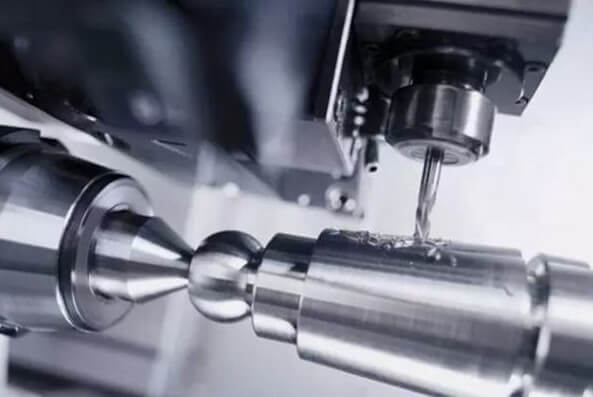
CNC precision machining has long been a cornerstone of modern manufacturing, enabling industries to achieve unparalleled accuracy, efficiency, and consistency in producing complex parts. As technology advances, the field of CNC precision machining is evolving rapidly, driven by innovations that are reshaping the way manufacturers approach production. Staying updated on the latest trends is crucial for businesses aiming to remain competitive and leverage the full potential of CNC technology.
Advancements in Automation and Robotics
One of the most notable trends in CNC precision machining is the integration of advanced automation and robotics. Modern CNC machines are increasingly equipped with robotic arms and automated material handling systems, reducing the need for manual intervention. This automation not only increases production speed but also minimizes human error, ensuring higher precision and consistent quality. Manufacturers can now operate multi-axis machines with minimal supervision, allowing for more complex parts to be produced efficiently.
The use of collaborative robots, or cobots, is also gaining momentum in CNC shops. Cobots work alongside human operators, performing repetitive or hazardous tasks while freeing skilled machinists to focus on programming, quality control, and optimization. This blend of human expertise and robotic precision is driving significant improvements in productivity and cost efficiency.
Multi-Axis Machining for Complex Designs
CNC precision machining is no longer limited to simple two- or three-axis operations. The latest trend involves multi-axis machining, including five-axis and even six-axis machines, which allow for intricate geometries and undercuts to be manufactured with high precision. These machines are particularly valuable in industries like aerospace, medical devices, and automotive, where components often require complex shapes and tight tolerances.
Multi-axis machining reduces the need for multiple setups, minimizing errors and production time. Designers and engineers can now push the boundaries of product complexity, creating parts that were previously impossible or too expensive to manufacture. The adoption of such technology is helping companies achieve faster turnaround times and better material utilization.
Integration of AI and Machine Learning
Artificial intelligence (AI) and machine learning are becoming integral to CNC precision machining. Smart CNC systems now utilize AI to optimize cutting paths, predict tool wear, and enhance overall operational efficiency. By analyzing real-time data from sensors embedded in the machines, AI algorithms can detect potential issues before they result in downtime, reducing waste and improving machine longevity.
Predictive maintenance is another area where AI is making a significant impact. Machine learning models can forecast when components or tools need servicing, preventing unexpected failures and costly interruptions. This level of intelligence enables manufacturers to maintain continuous production while maximizing machine performance.
Use of Advanced Materials
As product demands evolve, CNC precision machining is adapting to work with a broader range of materials. High-performance alloys, composites, and exotic metals are increasingly being machined with precision to meet stringent industry standards. These materials often require specialized tooling and machining strategies, which have been made possible through innovations in CNC technology.
The ability to machine hard-to-cut materials with high precision expands opportunities for industries such as aerospace, medical, and defense. CNC precision machining now enables the production of lightweight, durable, and highly resilient components, supporting the trend toward more efficient and sustainable designs.
Enhanced Software and Simulation Capabilities
Software developments are playing a pivotal role in the evolution of CNC precision machining. Advanced computer-aided design (CAD) and computer-aided manufacturing (CAM) software now provide more accurate simulations and toolpath optimization. Manufacturers can simulate entire machining processes before actual production, identifying potential issues and reducing trial-and-error.
Simulation software also allows for virtual testing of different cutting strategies, speeds, and feeds, helping to optimize efficiency and minimize material waste. The seamless integration of CAD/CAM software with CNC machines enables a digital-first approach, where design and manufacturing processes are closely interconnected, improving accuracy and accelerating product development cycles.
Additive Manufacturing and Hybrid Systems
While CNC precision machining is traditionally subtractive, the rise of additive manufacturing is influencing new hybrid approaches. Hybrid machines combine CNC milling with 3D printing capabilities, allowing manufacturers to produce complex parts more efficiently. These systems can print material in precise layers and then finish with CNC machining to achieve exact tolerances.
This combination of additive and subtractive processes enables rapid prototyping, shorter lead times, and more sustainable material usage. It is particularly advantageous for producing low-volume, high-complexity components in industries like medical implants and aerospace.
Sustainability and Energy Efficiency
Sustainability has become a major focus in modern manufacturing, and CNC precision machining is no exception. Manufacturers are adopting energy-efficient machines, optimizing cutting strategies, and utilizing eco-friendly materials to reduce their environmental footprint. Advanced CNC machines consume less power while maintaining high performance, and automation reduces waste by minimizing scrap and rework.
Furthermore, companies are implementing closed-loop systems that recycle coolant and cutting fluids, ensuring more responsible use of resources. These sustainable practices not only benefit the environment but also improve cost-effectiveness, making CNC precision machining a more attractive option for forward-thinking businesses.
Real-Time Monitoring and IoT Integration
The Internet of Things (IoT) is revolutionizing CNC precision machining by enabling real-time monitoring and remote control of machinery. Sensors embedded in CNC machines collect data on temperature, vibration, tool wear, and more, which can be analyzed to optimize performance and predict maintenance needs.
IoT integration allows operators to monitor production from anywhere, adjust parameters remotely, and ensure consistent quality across multiple machines. This trend enhances transparency, reduces downtime, and provides valuable insights into operational efficiency, helping manufacturers make data-driven decisions.
Customization and On-Demand Production
Consumer demand for personalized products is driving CNC precision machining toward more flexible and customizable production models. Small-batch and on-demand manufacturing are becoming more viable as CNC technology advances, enabling businesses to quickly switch between product designs without significant setup costs.
This trend is particularly significant for industries like medical devices, where patient-specific implants and prosthetics require highly precise and customized components. CNC precision machining allows manufacturers to deliver tailored solutions without compromising on quality or speed.
Global Collaboration and Digital Manufacturing Networks
Finally, the globalization of manufacturing has accelerated the adoption of digital networks that connect CNC shops worldwide. Companies can now collaborate across borders, sharing designs, simulation data, and machining strategies digitally. This interconnected ecosystem enables faster product development, improved supply chain efficiency, and access to specialized expertise.
Cloud-based platforms also facilitate version control, process documentation, and remote troubleshooting, ensuring that CNC precision machining operations remain agile and adaptable in a competitive global market.
Conclusion
The field of CNC precision machining is evolving at an unprecedented pace, driven by automation, AI, advanced materials, and digital integration. Manufacturers that embrace these trends can achieve higher precision, faster production, and greater flexibility, meeting the demands of modern industries while maintaining cost-effectiveness and sustainability. As technology continues to advance, CNC precision machining will remain a vital tool for businesses seeking to innovate and excel in a highly competitive landscape.
Staying abreast of these trends allows manufacturers to leverage the full potential of CNC precision machining, transforming challenges into opportunities and ensuring that precision, efficiency, and quality remain at the forefront of production.