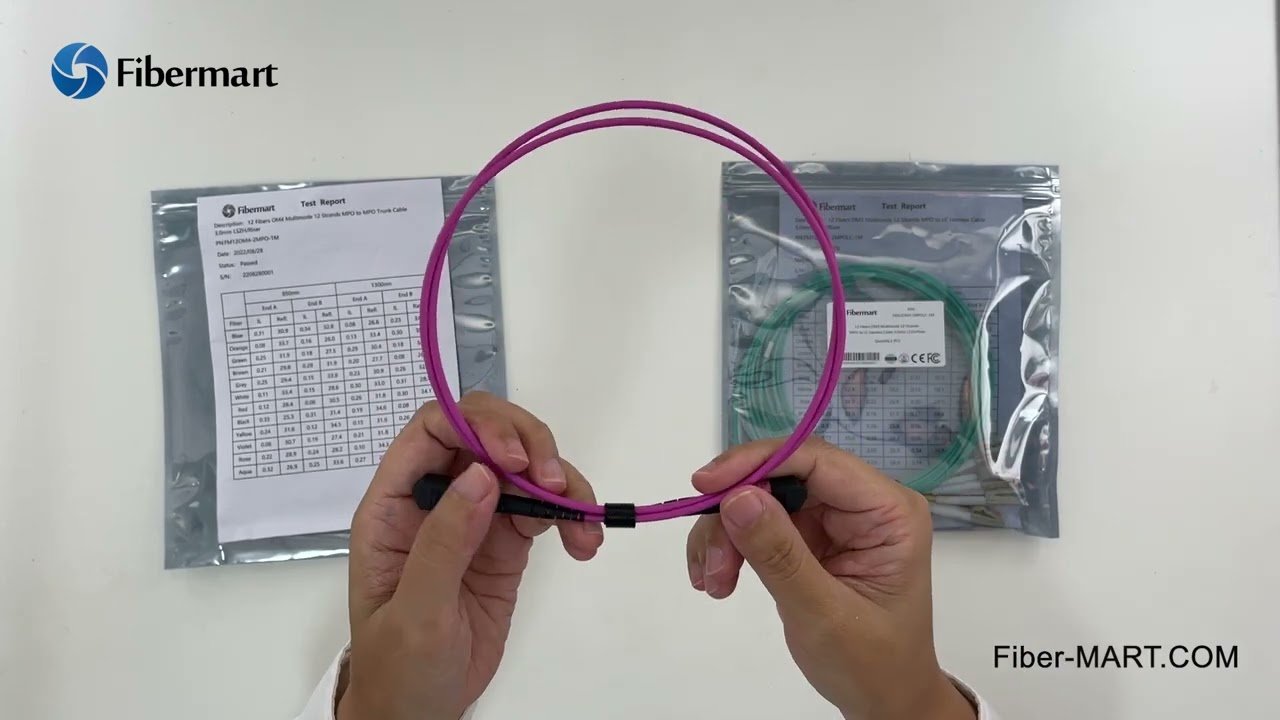
In the rapidly evolving world of fiber optic connectivity, choosing the right cabling solution can make a significant difference in network performance and scalability. One common point of confusion for network engineers, data center planners, and IT professionals is understanding the differences between various MPO 12 breakout cable configurations. This guide will walk you through everything you need to know about MPO 12 breakout cables, their uses, advantages, and how to choose the best option for your environment, with a focus on Fiber‑mart quality fiber cabling options.
What Is an MPO 12 Breakout Cable
An MPO 12 breakout cable is a type of high‑density fiber optic cable that integrates a single multi‑fiber MPO connector on one end and breaks out into individual fiber connectors on the other. The number “12” refers to the total number of optical fibers within the single MPO connector. This design allows for compact, manageable cabling that transitions from a high‑count trunk to individually terminated fibers for connection to network equipment.
MPO breakout cables are widely used in data center environments where space optimization and rapid deployment are priorities. They help reduce cable clutter while supporting high bandwidth applications such as 40G and 100G Ethernet, high‑performance computing clusters, and advanced storage area networks.
Key Features of MPO 12 Breakout Cables
High Fiber Count in a Compact Form
MPO 12 breakout cables bring 12 fibers into a single connector interface, which dramatically reduces the number of connections compared to traditional point‑to‑point cabling. This high fiber density is essential for modern high‑speed networks.
Simplified Cable Management
By consolidating multiple fiber connections into a single MPO connector, these cables streamline installation and maintenance. This reduces the chances of accidental disconnects and makes cable routing easier in racks and cabinets.
Flexible Deployment
The breakout design offers flexibility in connecting to network devices. For example, an MPO 12 breakout cable can split into 12 individual connectors such as LC or SC on the opposite end, providing direct attachment to equipment ports without additional adapters.
Why Choose Fiber‑mart MPO 12 Breakout Cable
When selecting an MPO 12 breakout cable, it’s important to choose a reliable supplier. Fiber‑mart is known for its high‑quality fiber optic solutions that meet rigorous industry standards. Fiber‑mart’s MPO 12 breakout cables offer consistent performance, excellent durability, and precise manufacturing, making them a dependable choice for enterprise and data center environments.
Quality and Compliance
Fiber‑mart MPO 12 breakout cables are manufactured with premium materials and adhere to international standards for fiber optic transmission. This ensures low insertion loss and high return loss, which are critical for maintaining signal integrity in high‑speed networks.
Variety of Fiber Types
Whether you need single‑mode or multi‑mode configurations, Fiber‑mart has a range of MPO 12 breakout cable options to suit your network needs. Single‑mode cables are ideal for long‑distance transmission while multi‑mode types support high throughput over shorter distances.
Customization Options
Fiber‑mart offers customizable lengths and connector configurations, allowing you to tailor the MPO 12 breakout cable to your specific installation requirements, eliminating unnecessary slack or splice points.
Comparing Different MPO 12 Breakout Cable Configurations
When choosing an MPO 12 breakout cable, consider the connector type, fiber type, and the deployment scenario. Below are the key comparison points to keep in mind.
Connector Type Comparison
The breakout end of the MPO 12 breakout cable can terminate in different connector types:
LC Connector Breakout
LC connectors are small and commonly used in high‑density applications. LC breakout cables are ideal for modern switches and routers that feature LC ports. They support efficient use of space in patch panels and network equipment.
SC Connector Breakout
SC connectors offer a larger form factor compared to LC but are still widely used in many enterprise setups. SC breakout cables may be preferred in environments where robust handling and easy insertion/removal are priorities.
Fiber Type: Single‑Mode vs Multi‑Mode
The choice between single‑mode and multi‑mode fiber types affects performance and cost:
Single‑Mode MPO 12 Breakout Cable
Single‑mode fiber supports longer distance transmission with minimal signal loss, making it suitable for large campus networks and long‑haul connections within large data centers. Single‑mode solutions are often used for 100G and beyond applications.
Multi‑Mode MPO 12 Breakout Cable
Multi‑mode fiber is optimized for short to medium distances and typically costs less than single‑mode. It is ideal for intra‑data center links and can support high data rates such as 40G and 100G when used with appropriate transceivers.
Cable Length and Installation Environment
Selecting the right cable length ensures optimal performance and reduces waste. Fiber‑mart offers various length options, which is essential when planning cable runs between racks, panels, and equipment. Consider environmental factors such as rack spacing, trunk pathways, and future scalability when choosing a length.
Practical Use Cases for MPO 12 Breakout Cables
Understanding where and how MPO 12 breakout cables are used helps in selecting the proper configuration for your network.
Data Center Interconnects
In large‑scale data centers, MPO 12 breakout cabling simplifies the connection between high‑density switch uplinks and server access ports. Fiber‑mart’s MPO assemblies reduce the amount of cabling needed while maintaining performance.
High‑Speed Network Upgrades
Upgrading to 40G or 100G speeds often involves migrating to parallel fiber connections. MPO 12 breakout cables support these high‑speed protocols by providing simultaneous connections to multiple channels.
Telecommunications Rooms
Within telecommunications rooms, breakout cables can fan out to equipment requiring individual fiber terminations. Fiber‑mart’s MPO 12 breakout cable solutions make it easier to manage patching between core and access layers.
Best Practices for Deploying MPO 12 Breakout Cables
Plan for Cable Management
Good cable management ensures airflow, reduces signal interference, and simplifies maintenance. Use labeled panels, cable ties, and structured pathways to keep MPO 12 breakout cables organized.
Test Before Deployment
Before permanent installation, always test your MPO 12 breakout cable runs for continuity and performance metrics such as insertion loss. Fiber‑mart cables are test‑certified, but verifying in‑situ performance ensures reliability.
Train Technicians on Handling
MPO connectors are delicate and require careful handling. Train staff on proper cleaning, insertion, and storage techniques to maintain signal integrity and avoid costly mistakes.
Future‑Proofing Your Network
As network demands grow, investing in high‑quality cabling like Fiber‑mart’s MPO 12 breakout cable ensures your infrastructure is ready for tomorrow’s challenges. These cables support evolving standards and higher bandwidths, reducing the need for frequent upgrades.
Conclusion
Choosing the right MPO 12 breakout cable is essential for building efficient, high‑performance fiber optic networks. By understanding the differences between connector types, fiber types, and deployment scenarios, you can select the best solution for your needs. Fiber‑mart’s reliable and customizable MPO 12 breakout cable offerings provide the performance and flexibility required in modern data centers and enterprise networks. With thoughtful planning and quality cabling, your network will be well‑equipped to handle current demands and future growth.