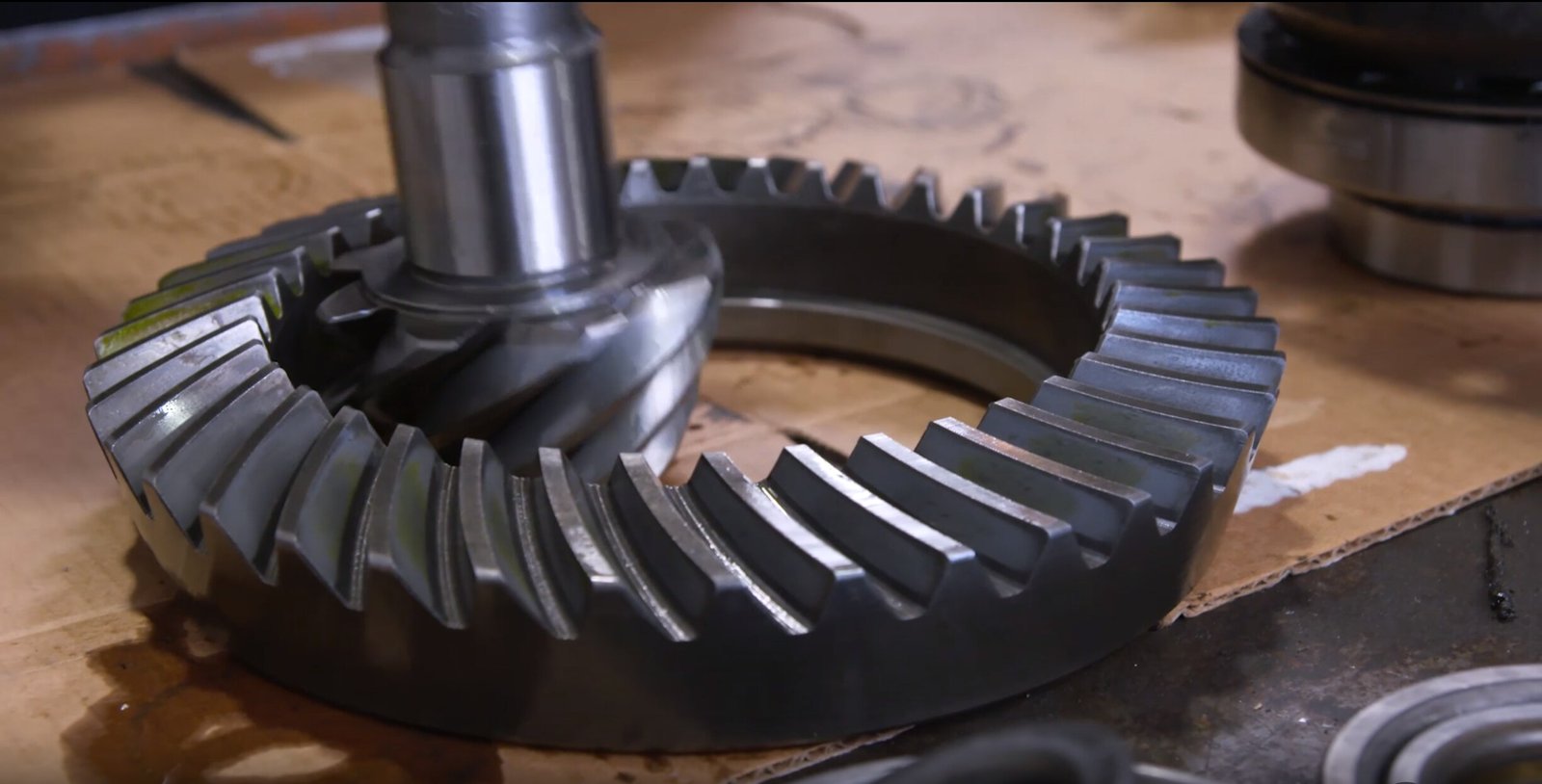
Nothing gets under your skin faster than hearing that low whine or growl from the back of your car or truck when you accelerate, especially if it gets louder with speed or turns into a full-on howl during turns. Maybe you feel vibrations through the floorboard, notice the vehicle pulling to one side under load, see oil seeping from the differential cover, or spot uneven tire wear starting to show up. These are all classic symptoms that your rear differential (part of the rear axle assembly) is on its way out—worn bearings, scored ring and pinion gears, contaminated fluid, or damage from heavy towing/off-roading.
The rear differential splits power from the driveshaft to the rear wheels, allowing them to spin at different speeds so the outside wheel can cover more ground during corners without scrubbing or binding. When it fails, you risk complete lock-up, broken axles, or losing control—definitely not something to ignore. Replacing it with a brand-new OEM or aftermarket unit? That can easily set you back $1,500 to $4,500+ for the part alone on common trucks and SUVs (think F-150, Silverado, Ram, Jeep Wrangler, or even some sedans with RWD). Add shop labor for dropping the old axle, setting pinion depth and backlash precisely, filling with the right gear oil, and testing—another $500 to $1,500—and the total hits hard, often making people question if the vehicle is worth saving.
This is exactly when searching for a cars junkyard near me turns into the smartest move. Local salvage yards are loaded with wrecked vehicles that still have perfectly good rear differentials and axle assemblies. Many of these come from front-end collisions where the rear end took zero impact—low miles, no abuse history, and often still spinning smoothly. You can find used rear differentials for $400 to $1,500 (sometimes less for popular models), either pull-your-own style (bring tools and pay by weight or flat fee) or have the yard pull and deliver it to you.
Going local has real advantages: You walk the rows, inspect the part in person—check for housing cracks, gear tooth condition, bearing play, fluid color (no metal glitter), and spin the output shafts to listen for roughness or grinding. No waiting on shipping, no surprises when the part arrives. In many areas, yards specialize in trucks, 4x4s, or imports, so finding a matching gear ratio (3.55, 3.73, 4.10, etc.), differential type (open, limited-slip, electronic locker), and setup (disc brakes, ABS sensors, suspension mounts) is straightforward. Call ahead, give them your make/model/year/VIN, and they can often tell you what’s on the ground that day.
But let’s be honest—local inventory can be hit-or-miss. Your exact year/engine/trim might not be sitting there, or the donor vehicle had high miles or towing abuse. That’s where combining a local search with online used auto parts platforms makes the difference. These sites pull real-time inventory from hundreds of salvage yards nationwide, including plenty near you. You enter your vehicle details (VIN is best for perfect matches), filter for used rear differentials or complete rear axles, and see listings with photos, donor mileage, condition reports, and often a 30-day warranty. Prices include shipping (frequently free or low-cost to most states), and you can compare multiple yards to get the lowest price or best condition unit.
Real example from folks I’ve talked to: A guy with a 2017 Ram 1500 had his limited-slip rear diff start whining after 90k miles of towing trailers. Local dealer quoted $4,200 installed remanufactured. He checked nearby junkyards first—no luck on matching 3.92 ratio LSD units. Then went online, found a tested low-mile (under 50k) rear axle assembly from a wrecked donor truck (minor front damage, rear untouched) for $1,050 shipped with warranty. Local shop installed it for $900—total under $2,000. Truck’s been quiet and strong since, no vibrations or leaks.
Why Used Rear Differentials from Junkyards Are Reliable When Sourced Right
Good salvage yards don’t just yank parts blindly. They inspect: check gear wear, bearing endplay, no cracks in the cast-iron or aluminum housing, fluid condition, and test for smooth, quiet operation. Many come from gently wrecked vehicles—low miles, no overheating or heavy abuse. You’re getting genuine OEM components that bolt right in, often with factory tolerances better than some budget aftermarket rebuilds.
Compared to remanufactured? Remans can be solid but cost double or triple and sometimes use mixed-quality parts. A clean used unit from a low-mile donor frequently outperforms them for longevity, especially if the original was well-maintained.
Environmentally, it’s a win too. Reusing heavy differential assemblies keeps metal out of landfills, cuts mining and forging emissions, and extends vehicle life—practical green choice that saves money.
How to Shop Smart for Used Rear Differentials
- Start local — Search “cars junkyard near me” + your city or ZIP. Call yards, provide VIN/year/make/model, ask about gear ratio, diff type, and condition. Visit if possible.
- Go online for wider selection — Use vehicle details for exact matches. Prioritize “tested,” “low miles donor,” clear multi-angle photos, no visible damage.
- Verify compatibility — Wrong ratio causes speedo errors, poor acceleration, driveline vibes. Match limited-slip vs open vs locker if your vehicle has it.
- Warranty & returns — 30+ days free is common—test immediately (spin wheels, listen for noise).
- Installation essentials — Shop job for most: drop axle, set pinion/backlash, fill with correct synthetic gear oil (75W-90, 80W-90, LSD additive if needed). Budget $500–$1,200 labor. Change fluid and check U-joints too.
- Red flags — No photos/history, high-mileage donors, “as-is” no testing, or prices too good to be true.
Whether you’re dealing with a daily driver, work truck, off-roader, or family SUV, a failing rear differential doesn’t have to mean trading in or eating a huge bill. Checking cars junkyard near me for local options or browsing online for the best used rear differential gets you back to smooth, quiet driving affordably.
Next time that whine starts or you feel the pull, grab your VIN and start searching. A good used rear axle from a junkyard source can save you thousands while keeping your ride reliable for years more.