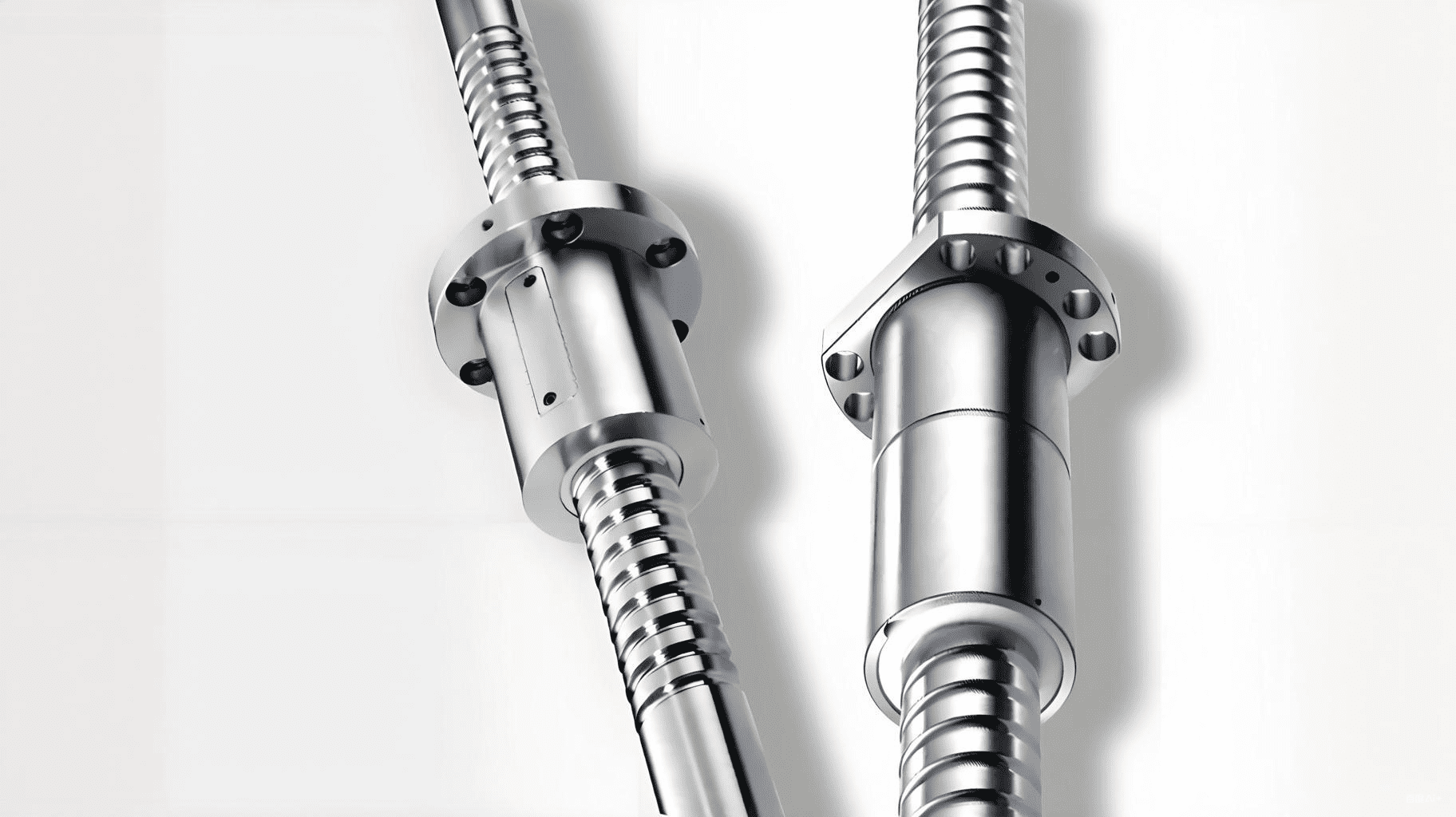
In the world of modern engineering and motion control systems, ball screws have established themselves as one of the most critical components for high-performance linear motion. Their combination of precision, speed, and mechanical efficiency makes them indispensable across industries — from aerospace and automotive engineering to robotics, medical devices, and industrial automation.
As demand for greater accuracy, smoother motion, and improved energy efficiency grows, manufacturers are turning to advanced ball screw production solutions that blend cutting-edge machining technology, smart automation, and digital analytics to produce components that meet today’s strictest performance and quality standards.
Understanding the Role of Ball Screws
A ball screw converts rotational motion into linear motion through a system of recirculating balls contained between a threaded screw shaft and a ball nut. These rolling elements dramatically reduce friction compared to traditional lead or trapezoidal screws, resulting in high mechanical efficiency — typically over 90%.
Ball screws are essential in applications where precise positioning, repeatability, and minimal backlash are required. Common uses include:
- CNC machine tools and precision milling equipment
- Aerospace actuation systems
- Robotics and automated handling systems
- Semiconductor manufacturing machinery
- Medical imaging and laboratory automation
Because they operate under high loads and at high speeds, producing reliable, uniform, and long-lasting ball screws requires precision at every stage of design, machining, and assembly.
Material Selection and Surface Hardening
The performance of a ball screw begins with selecting the right materials. High-carbon alloy steels such as AISI 52100 or SUJ2 are frequently used due to their high hardness, fatigue resistance, and dimensional stability. For environments exposed to moisture, chemicals, or sterilization cycles — such as medical equipment — stainless-steel ball screws are the preferred choice.
Once machined, ball screws typically undergo induction hardening, case carburizing, or nitriding to enhance surface hardness. These processes create a hardened external layer to resist wear, while maintaining a tough, ductile core that can withstand dynamic loads. Additionally, finishing operations like superfinishing, lapping, or precision grinding further improve surface smoothness, allowing the balls to move with minimal friction and ensuring consistent, quiet operation.
Advanced Machining Techniques
Precision is the cornerstone of ball screw production. To achieve high lead accuracy (often within ±0.003 mm per 300 mm of thread length), modern manufacturers rely on CNC thread grinding, precision rolling, and five-axis machining centers. Each technique offers specific benefits:
- Thread Grinding: Used for high-precision ball screws, grinding ensures exact geometry, pitch, and surface finish for low-noise, smooth-running systems.
- Thread Rolling: A cold-forming process that increases the strength of the material by aligning its grain structure, ideal for standard or medium-precision ball screws.
- Five-Axis CNC Machining: Enables complex geometries on non-standard screw designs or variable lead pitches, meeting specialized engineering specifications.
Automated robotic loading and multi-axis machine setups allow simultaneous part production, boosting throughput while maintaining extremely tight tolerances.
Assembly and Preloading Precision
Assembly is as critical as machining in achieving ball screw performance. During the assembly process, ball nuts are paired with their corresponding screws and loaded with precision steel balls. The ball size, preload configuration, and nut design all influence the efficiency, rigidity, and backlash characteristics of the final product.
To eliminate backlash — the unwanted axial play between the screw and nut — manufacturers often apply axial preloading, achieved by oversizing the balls or using double-nut assemblies. Automated ball insertion systems and robotic preloading ensure uniform ball distribution and consistent torque, reducing variability between production batches.
Quality Control and Measurement Technology
Maintaining consistent quality across mass production requires advanced inspection and monitoring systems. Modern ball screw production plants integrate in-line metrology and digital measurement tools, such as:
- Coordinate Measuring Machines (CMMs)
- Laser interferometers for lead accuracy testing
- Roundness and surface roughness analyzers
- Automated optical inspection systems
Data collected from these tools are fed back into production systems in real time, allowing corrective adjustments during machining rather than after. Manufacturers adhering to international standards like ISO 3408 ensure that ball screws meet global specifications for accuracy, load rating, and service life.
Automation and Industry 4.0 Integration
In the age of smart manufacturing, Industry 4.0 has revolutionized ball screw production. Intelligent sensors embedded in CNC machines monitor spindle loads, vibration, heat, and tool wear. This data enables predictive maintenance, minimizing downtime and improving output efficiency.
Production facilities equipped with MES (Manufacturing Execution Systems) and digital twins can simulate and optimize processes before actual machining begins. The result is better resource management, reduced material waste, and shorter lead times.
Automation also extends to packaging and traceability — barcode and RFID tagging systems ensure each ball screw can be tracked throughout its production, testing, and distribution lifecycle.
Sustainability and Process Efficiency
Sustainability is increasingly influencing production decisions in precision engineering. Ball screw manufacturers are adopting energy-efficient machining systems, recycling oils and coolants, and reducing carbon emissions through advanced process design and waste management.
The use of recyclable materials, optimized raw stock cutting, and dry machining technologies further contribute to eco-friendly production. Moreover, extending product lifespan through superior surface treatment and lubrication techniques helps reduce the overall environmental footprint of mechanical systems using ball screws.
Future Trends and Innovations
Looking ahead, the next generation of ball screw production will leverage advancements in AI-driven process optimization, automated micro-polishing, and adaptive control machining. Materials research is also evolving, with hybrid designs combining ceramics, composites, or self-lubricating polymers for specialized applications.
Additionally, miniature and high-speed ball screws are gaining prominence in compact robotics, precision medical devices, and semiconductors, demanding even more accuracy and customization from manufacturers.
Conclusion
Ball screw production solutions represent the pinnacle of precision engineering — combining advanced materials, state-of-the-art machining, automated assembly, and smart digital integration. These solutions ensure that every component delivers exceptional accuracy, repeatability, and reliability.
As industries worldwide pursue greater efficiency, automation, and sustainability, the continuous innovation in ball screw manufacturing will remain a cornerstone of motion technology. Through modern production methods and intelligent engineering, manufacturers are not just meeting the demands of today’s high-performance machines — they’re setting new standards for the future of precision motion.