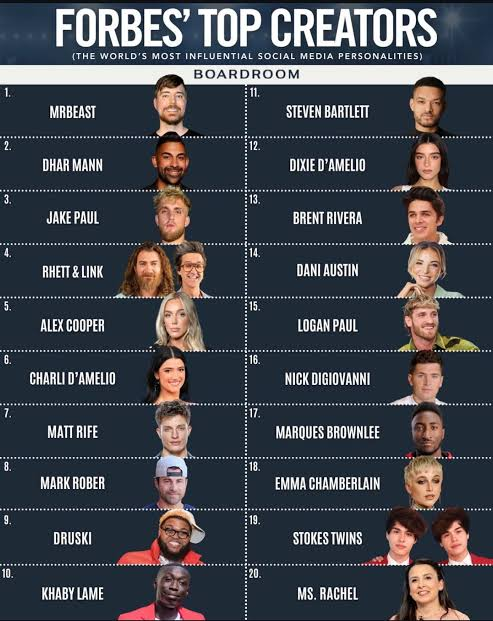
The digital landscape is evolving rapidly, transforming how people communicate, learn, shop, and conduct business. Social media platforms, video-sharing websites, podcasts, and online communities have created opportunities for individuals to influence millions of people biggest influencers worldwide. Today, influencers are more than content creators; they are entrepreneurs, educators, entertainers, and innovators who shape digital culture and consumer behavior.
From introducing new technologies to building global communities, the biggest influencers have a significant impact on marketing strategies, online trends, and public conversations. Their ability to connect with audiences has changed how brands promote products and how individuals discover information.
This article explores ten influential personalities who have helped shape the digital landscape through their content, creativity, and online presence.
1. MrBeast: Redefining Digital Entertainment
Creator: Jimmy Donaldson
MrBeast has transformed online entertainment through ambitious challenges, creative competitions, philanthropic projects, and large-scale productions. His videos often feature elaborate concepts designed to capture attention and encourage viewers to watch until the end.
His approach demonstrates how digital creators can build recognizable brands by combining storytelling, audience engagement, and consistent experimentation. Beyond entertainment, his business ventures have expanded his influence into consumer products and other commercial opportunities.
MrBeast also illustrates the growing importance of reinvesting in content production. By developing ideas that stand out from traditional online videos, he has helped establish new expectations for high-quality creator content.
2. Marques Brownlee: Making Technology Accessible
Online name: MKBHD
Marques Brownlee is one of the most recognizable technology reviewers on digital platforms. His content covers smartphones, computers, electric vehicles, cameras, and emerging consumer technologies.
What makes Brownlee influential is his ability to explain complex technical features in an accessible and organized way. His reviews help audiences understand product differences and make more informed purchasing decisions.
His professional presentation, detailed analysis, and consistent production quality have also influenced how technology creators approach video production.
As artificial intelligence, wearable devices, and connected products become more common, technology reviewers play an increasingly important role in helping consumers understand innovation.
3. Khaby Lame: The Power of Simple Content
Creator: Khabane Lame
Khaby Lame became internationally famous through short videos that humorously expose unnecessarily complicated solutions to everyday problems. His recognizable expressions and mostly wordless communication have allowed his content to reach audiences across language and cultural boundaries.
His success demonstrates that digital influence does not always depend on sophisticated equipment, elaborate scripts, or extensive dialogue. A simple concept, delivered consistently, can connect with millions of viewers.
Lame’s popularity also highlights the importance of short-form video platforms in modern digital culture. His content shows how relatable humor can cross borders and become a recognizable personal brand.
For marketers and creators, his career offers an important lesson: clear ideas and universal experiences can sometimes be more powerful than complicated messages.
4. Marques Brownlee’s Fellow Tech Innovator: Linus Sebastian
Online name: Linus Tech Tips
Linus Sebastian has played a major role in online technology education through his work with Linus Tech Tips. His content explores computer hardware, gaming systems, consumer electronics, and practical technology experiments.
His channel makes technical subjects interesting through demonstrations, comparisons, and hands-on testing. This approach appeals to both technology enthusiasts and viewers who want to understand how digital devices work.
Sebastian has also helped demonstrate that creator-led media organizations can develop beyond individual personalities. With specialized teams, production facilities, and multiple content formats, technology channels can operate as substantial digital businesses.
His influence reflects the growing relationship between online education, entertainment, and technology journalism.
5. Marques Brownlee’s Broader Industry: Marques Brownlee and Tech Creators
Technology creators deserve a central place in discussions about digital transformation, but the landscape also includes influencers working in education, entrepreneurship, and artificial intelligence. One prominent example is Marques Brownlee, whose reviews illustrate the growing influence of independent digital media.
His work demonstrates how creators can build trust by providing consistent information and clearly explaining their perspectives. Rather than relying exclusively on traditional advertising, audiences increasingly turn to independent reviewers for product insights.
This shift has encouraged businesses to recognize that transparency, expertise, and credibility are essential elements of effective digital communication.
Note: Brownlee has already been covered above; the remaining profiles introduce distinct creators who influence different parts of the digital ecosystem.
6. Emma Chamberlain: Changing Lifestyle Content
Creator: Emma Chamberlain
Emma Chamberlain has influenced digital culture through her conversational style, personal storytelling, and distinctive editing techniques. Her early video content helped popularize a more informal approach to online lifestyle entertainment.
Instead of presenting a highly polished version of everyday life, Chamberlain developed a style that felt personal and relatable to younger audiences. This approach influenced creators who wanted to establish authentic connections with viewers.
Her work has also extended into fashion, brand partnerships, and entrepreneurship, demonstrating how a creator’s identity can develop into a broader business.
Chamberlain’s career highlights an important change in digital marketing: audiences often respond strongly to personalities who communicate naturally and maintain a recognizable voice.
7. Marques Brownlee’s Counterpart in Education: Mark Rober
Creator: Mark Rober
Mark Rober is a former engineer who creates educational videos combining science, engineering, experimentation, and entertainment. His projects often transform complicated scientific principles into engaging visual demonstrations.
His content helps make science approachable for audiences who might not otherwise seek out technical educational material. By using practical experiments and creative storytelling, he shows that learning can be both informative and entertaining.
Rober’s work also demonstrates the educational potential of digital platforms. Online videos can introduce scientific concepts to a global audience without requiring viewers to attend a formal classroom.
As digital education continues to expand, creators who combine expertise with engaging presentation can help make useful knowledge more accessible.
8. Marques Brownlee’s Business-Oriented Peer: Gary Vaynerchuk
Online name: GaryVee
Gary Vaynerchuk is an entrepreneur and digital marketing personality known for discussing branding, social media, business development, and consumer behavior.
His content encourages businesses to understand how audiences use different platforms and adapt their communication strategies accordingly. He frequently emphasizes the importance of producing relevant content, experimenting with formats, and responding to changes in online culture.
Vaynerchuk’s influence is particularly visible in discussions about personal branding and creator-led marketing. His work has helped popularize the idea that founders and professionals can build recognizable public identities through consistent digital communication.
His career illustrates how online platforms can become important channels for business education, professional networking, and brand development.
9. Marques Brownlee’s Global Entertainment Peer: PewDiePie
Creator: Felix Kjellberg
PewDiePie became one of YouTube’s best-known personalities through gaming videos, commentary, reactions, and internet culture content. His career represents an important period in the development of creator-driven entertainment.
He helped demonstrate that individual personalities could attract enormous audiences without following traditional television production models. His informal presentation and direct relationship with viewers became influential features of early YouTube culture.
PewDiePie’s career also reflects the changing nature of digital fame. Online personalities can develop communities that remain engaged through evolving interests, new formats, and changing platform trends.
His long-standing presence in internet culture makes him an important example of how individual creators helped establish the foundations of today’s creator economy.
10. Marques Brownlee’s Modern-Day Business Peer: Ali Abdaal
Creator: Ali Abdaal
Ali Abdaal is known for creating content about productivity, learning, personal development, and digital entrepreneurship. His videos and educational resources help viewers explore practical approaches to organizing their work and developing useful skills.
Abdaal has also demonstrated how creators can expand beyond advertising revenue by developing courses, books, newsletters, and other educational products.
His work reflects a broader trend in the digital landscape: audiences increasingly seek content that provides lasting value rather than entertainment alone.
By combining educational material with business experience, Abdaal has helped popularize creator-led learning and online knowledge businesses.
How Influencers Are Changing the Digital Landscape
The influence of these personalities extends beyond their individual platforms. Their work reflects several major developments in the digital economy.
The Growth of Creator-Led Marketing
Brands increasingly collaborate with creators to reach audiences through familiar and engaging voices. Influencers can introduce products, explain services, and generate discussions within established communities.
Successful partnerships generally depend on relevance, transparency, and audience trust rather than follower counts alone.
The Importance of Authenticity
Audiences have become more selective about the content they consume. Creators who communicate consistently and develop recognizable identities can establish stronger relationships with their communities.
Authenticity does not mean avoiding professional production. Instead, it involves presenting information in a way that matches the creator’s values and audience expectations.
The Expansion of Digital Entrepreneurship
Influencers can develop businesses around their expertise, interests, and communities. These businesses may include merchandise, educational products, subscription services, media companies, and consumer brands.
This development has turned content creation into a potential entrepreneurial pathway.
The Role of Emerging Technology
Artificial intelligence, recommendation algorithms, editing software, and analytics tools continue to influence how digital content is produced and distributed.
Creators who understand these technologies can experiment with new formats, improve production workflows, and better understand audience preferences. However, maintaining accuracy, privacy, and responsible disclosure remains important.
Conclusion
The biggest influencers changing the digital landscape come from different backgrounds, including entertainment, technology, education, science, and business. Personalities such as MrBeast, MKBHD, Khaby Lame, Emma Chamberlain, Mark Rober, and Ali Abdaal demonstrate the many ways creators can build communities and influence digital culture.
Their achievements reveal that online influence depends on more than popularity. Creativity, consistency, credibility, and the ability to understand audience needs are essential factors in building a lasting digital presence.
As technology and social platforms continue to evolve, influencers will remain important participants in digital communication, marketing, and entrepreneurship. Their future impact will depend on how effectively they adapt to changing audience expectations while maintaining trust and providing meaningful value.