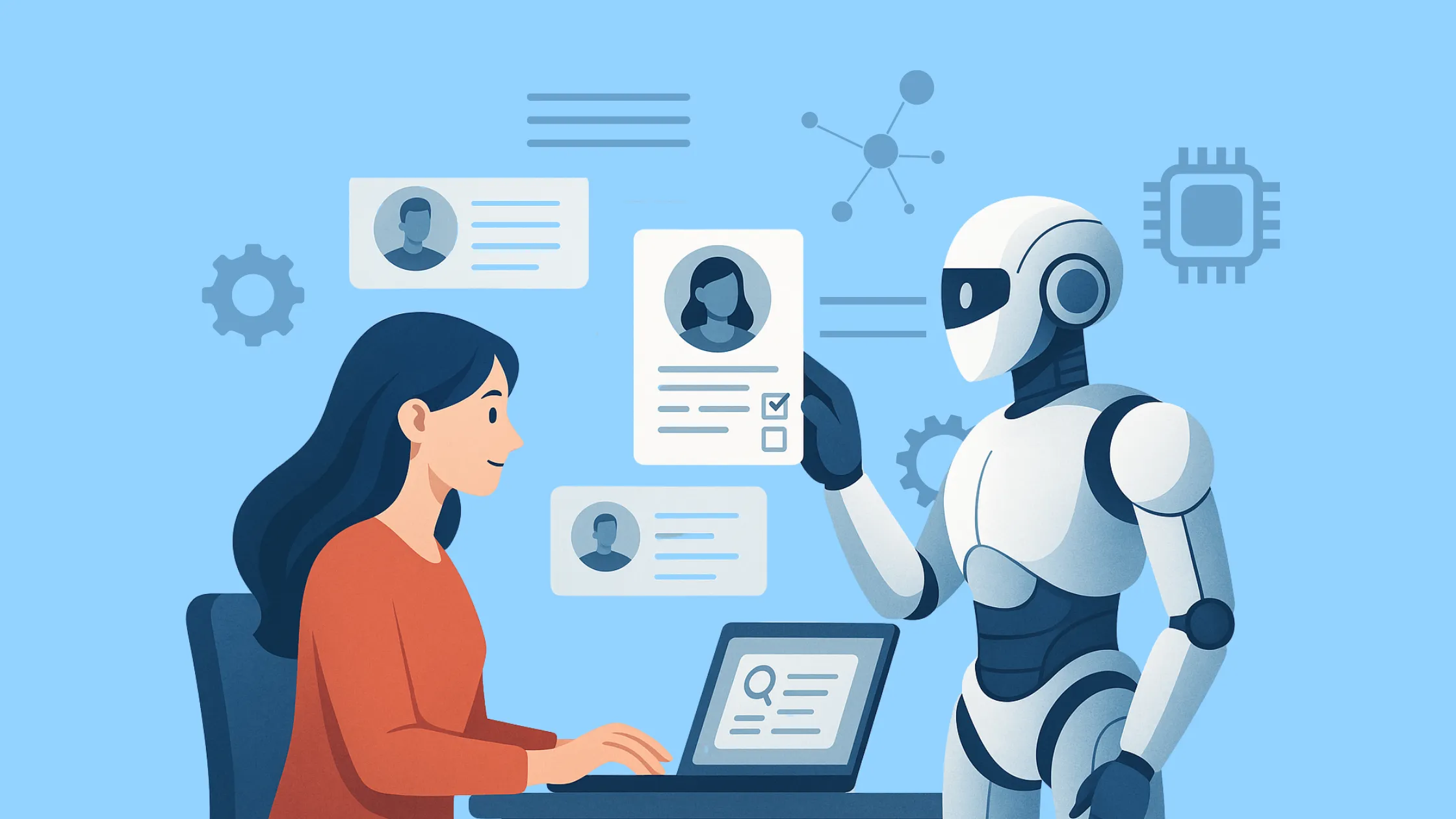
Growing businesses often face a difficult challenge: they need to hire talented people quickly while managing limited time, resources, and recruitment budgets. Traditional hiring processes can become increasingly demanding as a company expands. Reviewing resumes, identifying suitable candidates, scheduling interviews, communicating with applicants, and maintaining recruitment records can consume significant time for internal teams.
Artificial intelligence is changing how businesses approach these challenges. Artificial intelligence recruiting uses AI-powered technologies to support different stages of the hiring process. From candidate sourcing and resume screening to communication and recruitment analytics, these tools can help organizations create more structured and efficient hiring workflows.
For growing companies, working with artificial intelligence recruiters or adopting AI-supported recruiting systems can provide several practical benefits.
Faster Candidate Sourcing
One of the biggest advantages of AI-supported recruitment is speed. Growing businesses may need to fill multiple positions simultaneously, making manual candidate searches difficult to manage.
AI recruiting technologies can process large amounts of candidate information and identify profiles that match predefined job requirements. Instead of relying entirely on manual searches, recruiters can use technology to narrow the candidate pool according to skills, experience, qualifications, and other relevant criteria.
This can reduce the amount of time spent on repetitive sourcing activities and allow recruitment teams to focus more attention on candidates who meet the basic requirements of a position.
Managing High Hiring Volumes
As businesses grow, recruitment volume often increases. A company that previously hired a few employees each year may eventually need to recruit dozens or hundreds of people.
Artificial intelligence can help recruitment teams manage larger candidate pools without requiring every step to be completed manually. This scalability can be particularly useful for businesses experiencing rapid expansion.
More Efficient Resume Screening
Reviewing hundreds of resumes manually can be time-consuming. Artificial intelligence can assist with organizing and screening applications based on information contained within candidate profiles and resumes.
AI systems can identify relevant skills, employment history, education, certifications, and other job-related information. Recruiters can then review candidates who appear to meet the established requirements.
This does not mean that AI should make the final hiring decision. Human recruiters remain important because resumes may not fully represent a person’s abilities, potential, communication style, or cultural contribution to an organization.
Reduced Administrative Work
Recruitment includes many repetitive administrative tasks. These can include sending basic messages, organizing candidate information, scheduling interviews, updating records, and answering frequently asked questions.
AI-powered recruitment platforms can automate or assist with some of these activities. This allows hiring teams to spend less time on repetitive work and more time communicating with candidates and hiring managers.
For a growing business, reducing administrative workload can help the recruitment function operate more efficiently as hiring demands increase.
Improved Candidate Communication
Candidates increasingly expect timely communication throughout the hiring process. Delayed responses can create a frustrating experience and may make an organization appear disorganized.
AI-powered recruitment systems can support communication by providing automated responses, interview reminders, application updates, and answers to common questions.
Chatbots and automated messaging tools can provide information outside normal working hours as well. However, important conversations and sensitive hiring decisions should still involve human professionals.
Creating a More Consistent Process
Consistency is another potential benefit. AI-supported workflows can help organizations establish standardized recruitment procedures.
For example, businesses can create consistent screening criteria, communication workflows, interview scheduling processes, and candidate tracking systems. Standardization can make recruitment easier to manage across different departments and locations.
Better Use of Recruitment Data
Growing companies generate substantial amounts of recruitment information. This may include application numbers, sourcing channels, interview activity, time-to-hire data, and candidate progression.
AI analytics can help organize this information and identify patterns. Recruitment leaders can use these insights to understand where candidates are entering the hiring funnel, where applicants are dropping out, and which parts of the process may require improvement.
Data should be interpreted carefully, however. A statistical pattern does not automatically explain why something happened. Human review remains necessary when making important workforce decisions.
Supporting Better Candidate Matching
Artificial intelligence can compare candidate information with job requirements and identify potential matches. This can help recruiters discover candidates whose qualifications might otherwise receive limited attention.
For example, an AI system may identify transferable skills or relevant experience across different job titles. This can broaden the search while still allowing recruiters to establish specific requirements for each position.
The goal should be to support recruiters rather than replace professional judgment.
Potentially Lower Recruitment Costs
Recruitment expenses can increase as companies expand. Internal staff may spend considerable hours handling applications, scheduling interviews, and completing administrative activities.
By automating selected tasks, AI recruitment technology may help businesses use their recruitment resources more efficiently. The financial benefit depends on the technology, implementation costs, hiring volume, and how effectively the organization integrates the system into its existing workflow.
Businesses should therefore evaluate both the costs and expected operational benefits before adopting a solution.
Supporting Recruitment Teams as Businesses Scale
Scalability is especially important for growing organizations. Recruitment processes that work for a small company may become difficult to maintain when the number of employees and applicants increases.
Artificial intelligence can provide additional support without requiring every increase in hiring activity to result in the same increase in manual administrative work.
This makes AI-supported recruitment particularly relevant for companies entering new markets, expanding departments, launching new products, or experiencing rapid workforce growth.
Maintaining Human Oversight
Although AI can provide valuable recruitment assistance, technology should not operate without appropriate human oversight. Hiring decisions can affect people’s careers and a company’s workforce, so businesses need responsible processes.
Recruiters should review AI-generated recommendations, monitor the criteria being used, and check whether automated systems produce unintended patterns or exclude qualified candidates.
Organizations should also consider privacy, transparency, data security, and applicable employment laws when implementing AI recruiting technologies.
The Role of Artificial Intelligence Recruiters
Artificial intelligence recruiters can combine technology with human recruitment expertise. Their role may involve using AI tools for candidate sourcing, screening, communication, and recruitment analysis while applying human judgment to interviews and final decisions.
This combination can create a more balanced approach. Technology handles appropriate repetitive tasks, while experienced recruiters concentrate on relationship building, candidate evaluation, and collaboration with hiring managers.
Conclusion
Artificial intelligence recruiting can offer growing businesses several practical advantages. Faster sourcing, efficient resume screening, reduced administrative work, improved communication, data analysis, candidate matching, and greater scalability can all contribute to a more organized recruitment process.
However, successful implementation requires more than simply adding AI software. Businesses need clear hiring criteria, responsible data practices, human oversight, and regular evaluation of recruitment outcomes.
When used thoughtfully, AI can serve as a valuable recruitment support system. Artificial intelligence recruiters can use these technologies to reduce repetitive workloads while maintaining the human expertise necessary for meaningful candidate evaluation and effective hiring decisions.