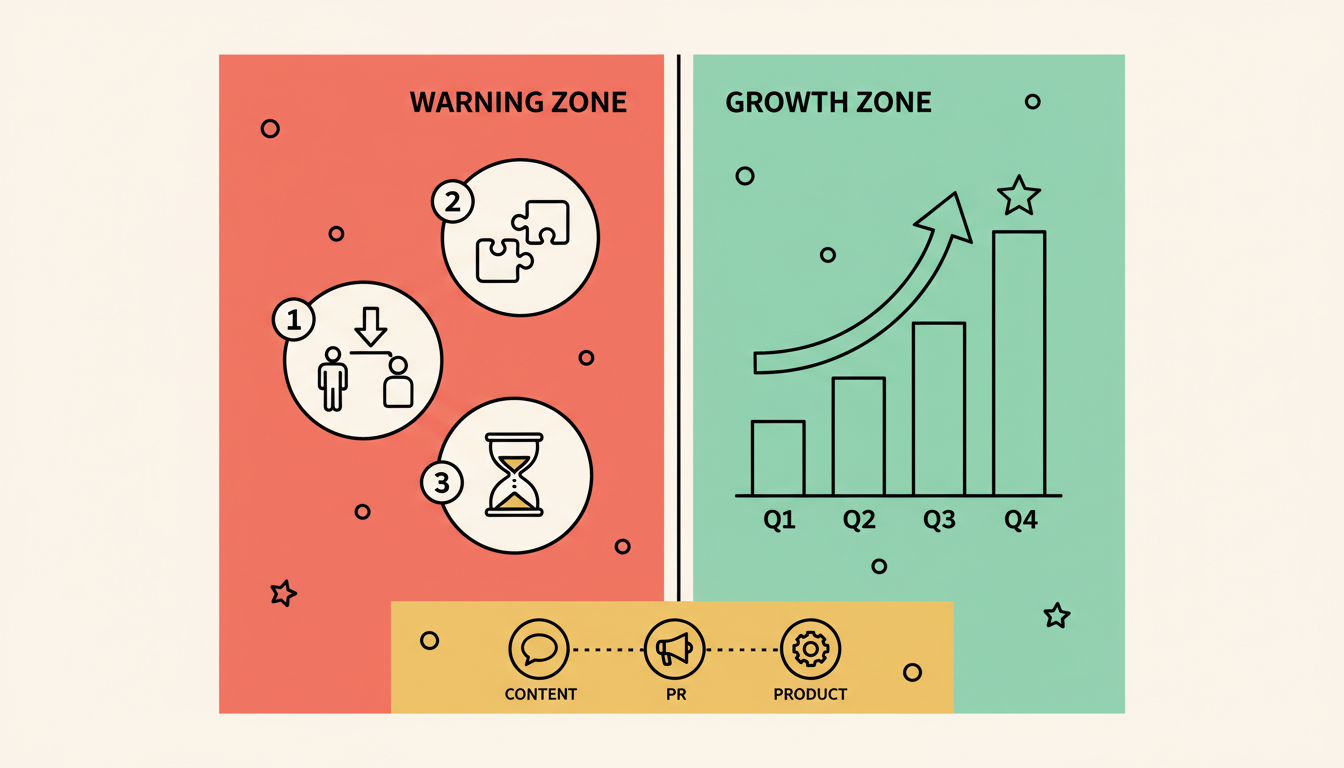
You hold the number one ranking on Google for your most valuable keyword. Traffic should be strong. Instead, clicks are flat or declining. The reason is sitting in plain sight at the top of the search results page.
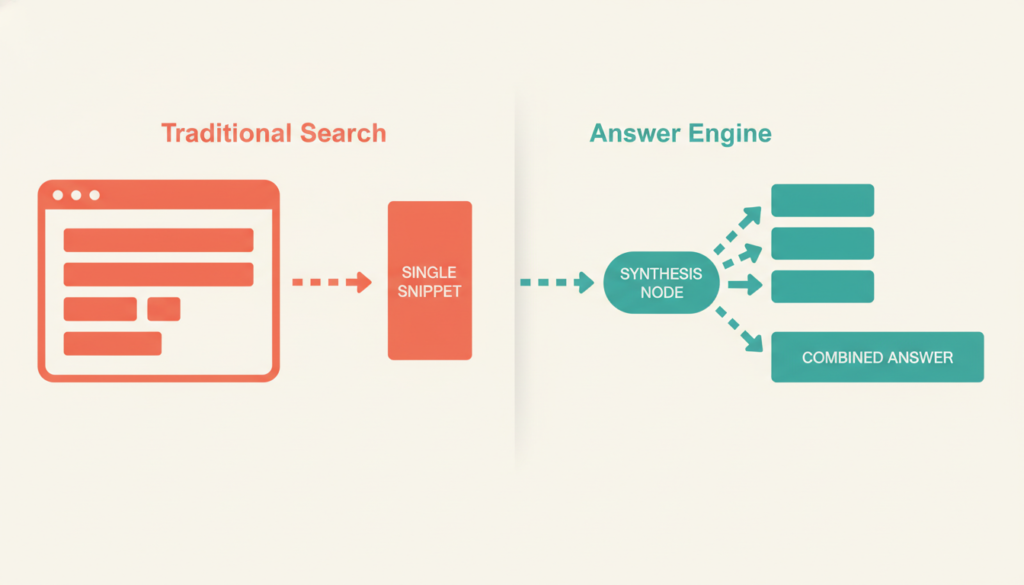
AI-generated answers now appear before organic results. Answer engines like Perplexity, ChatGPT, and Google AI Overviews deliver synthesized responses that satisfy user queries without a single click. Your ranking still matters. But it is no longer enough.

What Most Digital Marketers Get Wrong About Answer Engines
The instinct is to treat answer engine optimization as a variation of featured snippet optimization. Target question keywords, structure your content, and hope Google pulls your answer. This approach misses the bigger shift.
Answer engines do not just pull a snippet from one page. They synthesize information from multiple sources, evaluate credibility across the web, and generate original responses. Your page might contribute to the answer without ever being linked or credited.
The other common mistake is ignoring answer engines entirely because they are “too new” to matter. Usage data tells a different story. Millions of users now start their research in ChatGPT or Perplexity instead of Google. Ignoring these platforms means ignoring a growing share of your audience.
Ranking number one means less when the answer appears before the results.
What Answer Engine Optimization Demands
Content Designed for Extraction
Answer engines extract facts, definitions, comparisons, and recommendations. Your content must present these elements clearly. Use direct statements, structured lists, and explicit conclusions. Buried insights get overlooked by extraction algorithms.
Multi-Source Authority Signals
Answer engines cross-reference your claims against other sources before including them. Build corroborating mentions across industry publications, review sites, and authoritative directories. A claim that only appears on your website gets less trust than one confirmed by multiple independent sources.
Intent-Aligned Content Architecture
Answer engines match content to user intent with precision. Organize your site around specific user problems, not broad topic categories. Each page should target a clear intent and deliver a definitive answer. The practice of ai search optimization centers on mapping content to the exact questions your audience asks AI assistants.
Real-Time Content Freshness
Answer engines with retrieval capabilities prioritize current information. A page last updated 18 months ago signals outdated expertise. Refresh your core content regularly with new data, updated examples, and current recommendations.
Structured Data and Schema Markup
Help answer engines understand your content by implementing comprehensive schema markup. FAQ schema, HowTo schema, and Product schema give AI systems explicit signals about what your content contains and how it should be categorized.
Brand Entity Clarity
Answer engines need to understand your brand as a distinct entity. Ensure your brand name, product names, and key attributes are consistent across every platform. Ambiguous or conflicting brand information reduces your chances of being recommended.

Practical Steps to Optimize for Answer Engines
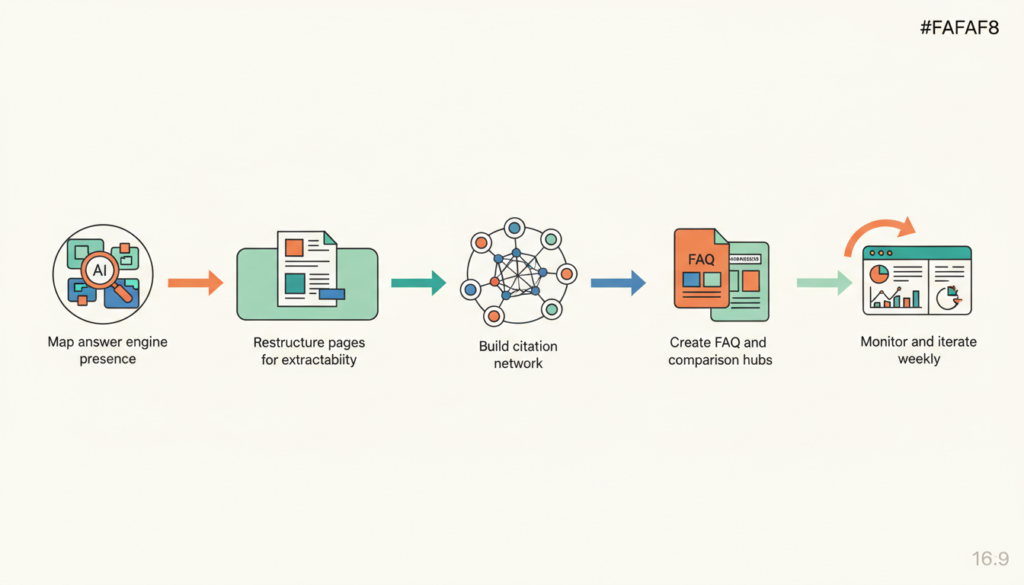
Map your answer engine presence today. Run 30 queries in ChatGPT, Perplexity, and Google AI Overviews using the same keywords your audience searches. Record which brands appear, which sources get cited, and where your brand is absent. This audit reveals your exact gaps.
Restructure your top pages for extractability. Add summary sections at the top of each page. Use clear H2 and H3 headers that mirror common questions. Include definition boxes, comparison tables, and numbered step lists. Make it easy for any AI system to pull a clean, accurate answer.
Build a citation network across trusted sources. Publish guest articles in industry outlets. Contribute data to analyst reports. Get your experts quoted in relevant publications. Each external mention strengthens the trust signal that answer engines require before recommending your brand.
Create FAQ and comparison hubs. Users ask answer engines comparison and recommendation questions constantly. Build dedicated pages that address “best X for Y” and “X versus Z” queries with honest, detailed analysis. Effective ai search optimization includes owning the answers to comparison queries in your category.
Monitor and iterate weekly. Answer engine results change faster than traditional search results. Establish a weekly review cadence where you check your visibility, track competitor movements, and update content based on what the data shows.
The Shift Is Happening With or Without You
Answer engines are not replacing traditional search overnight. But they are capturing an increasing share of high-intent queries. The queries where users are closest to a purchasing decision.
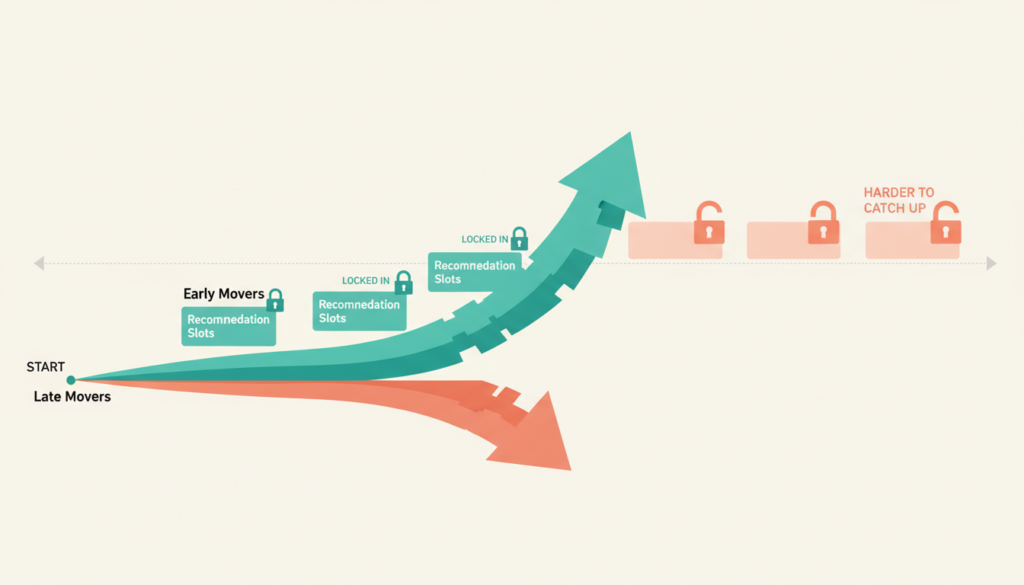
Your competitors who optimize for answer engines now will own the recommendation slots that influence buyer behavior. These positions compound over time as AI models reinforce established associations.
Waiting for answer engine optimization to become standard practice means entering the race after your competitors have already built their lead. The brands that act now set the benchmark everyone else tries to match later.
The shift from rankings to recommendations is not a future event. It is happening today. Your strategy should reflect that reality.